

We offer comprehensive design and installation services for photovoltaic systems on roofs and land for companies. This allows a photovoltaic system to be installed without any upfront costs, benefiting immediately from energy savings.
In addition, we have balcony solar panels with 400W or 800W power ratings, ideal for villas and apartment blocks. We offer complete kits including panels, cables, inverters and brackets, ready for quick and easy installation.
We are a distributor of switchboards for photovoltaic systems for both the AC and DC side, as well as supplying photovoltaic ballasts suitable for domestic and industrial systems.
In cooperation with one of our partner companies, we also carry out asbestos removal and disposal in Piedmont, Liguria and Valle d’Aosta, offering the possibility of doing all this at zero cost for the customer thanks to specific facilities.
Choose our services for a complete and safe approach to your energy transition.

We offer an innovative solution for companies wishing to install photovoltaic systems without an initial investment. This is possible thanks to the operational leasing of photovoltaic systems, which has many advantages:
No initial investment: Depending on the company’s rating, no initial payment will be required. Instead, there is a fixed fee, usually quarterly, for a term of up to 10 years.
No financing: access to bank financing is not required, thus avoiding hidden costs, time-consuming bureaucratic procedures and impacts on the company’s financial castellum.
Fully deductible rental fee: the rental fee is 100% deductible from IRES and IRAP, offering a significant tax advantage.
Immediate savings: You will immediately benefit from savings on your energy bill, the Scambio sul Posto and tax advantages. The fee is ‘self-liquidating’, i.e. it is covered entirely by the energy savings achieved.
Guaranteed savings: The lessor guarantees energy savings, ensuring that the rental fee is covered by the savings achieved.
Zero management risk: the fixed fee is ‘Full Service’, including insurance, maintenance, material replacement, monitoring and reporting. This protects the company from rising energy costs and other management risks.
No impact on company assets: Since the plant is not owned during the rental period, there are no depreciation or asset management issues. Furthermore, the rental is not taken into account in sector studies and does not impact the company’s credit rating.
Ownership at the end of the rental contract: At the end of the rental contract, the system becomes the property of the customer without any redemption fee, allowing them to fully benefit from the energy savings generated.
This solution represents an ideal opportunity for companies that want to reduce their energy costs and improve their sustainability, without having to commit significant financial resources right from the start.

Photovoltaic panels are devices designed to transform solar energy into electrical energy. This technology is based on the use of photovoltaic cells, which are generally made of silicon. Photovoltaic cells exploit the chemical and physical properties of silicon to convert the electromagnetic energy of sunlight into electricity. When light strikes the surface of the cells, it is absorbed and generates an electric current, thanks to the so-called photovoltaic effect. This electrical energy can then be used directly or stored for later use.
A photovoltaic panel consists of several fundamental parts that ensure its operation and durability. The heart of the panel is the photovoltaic cells, which are mounted on a rigid support. These cells, generally made of silicon, are arranged in series to increase the capacity to generate electricity.
The panel is protected by a strong enclosure, usually made of tempered glass on the front and an insulating, waterproof material on the back. This container protects the photovoltaic cells from atmospheric phenomena such as rain, hail and UV rays, ensuring a long service life for the system.
Inside the panel are also electrical circuits that convey the energy produced by the cells to the outside, where it can be used or stored. Often, photovoltaic panels are connected to external storage systems, such as batteries, which store the excess energy produced and release it gradually over time, ensuring a constant supply even when the sun is not shining. Although accumulators are essential for optimising the use of the energy produced, they are external components of the photovoltaic module itself.

Photovoltaic systems can be classified mainly into two categories: Network and Stand Alone, each with distinct characteristics and uses.
Grid Feeding Photovoltaic Systems
These systems are directly connected to the grid and do not use storage batteries. In practice, the energy produced by the solar panels is immediately fed into the grid, and the customer can ‘take’ it from the grid when the system is unable to produce energy, for example during the night or on cloudy days. This type of system is regulated by two meters: one measures the energy produced and fed into the grid, while the other measures the energy taken from the grid.
The popularity of this technology in recent years is due to the lower implementation and maintenance costs compared to systems that include storage batteries, and the higher operating efficiency. In addition, feed-in systems are generally easier to operate, as the interaction with the existing electricity grid makes them suitable for many residential and commercial contexts.
Stand Alone Photovoltaic Installations
Stand-alone photovoltaic systems, also known as off-grid systems, are designed to operate independently of the electricity grid. They are particularly useful in remote or inaccessible areas where access to the grid is impossible or impractical. These systems use a battery pack to store the energy produced by the solar panels during the day, allowing a source of energy to be available even when there is no sunlight.
A typical stand-alone system includes photovoltaic modules connected to a charge controller, which manages the flow of energy to the batteries, and an inverter, which converts the stored energy into usable alternating current. These systems are ideal for specific applications such as rural electrification, water pumping, or powering radio links and other remote infrastructure.
In summary, while feed-in systems are optimal for reducing energy costs and increasing efficiency in areas served by the electricity grid, stand-alone systems are essential for ensuring access to energy in places where the electricity infrastructure is not available.
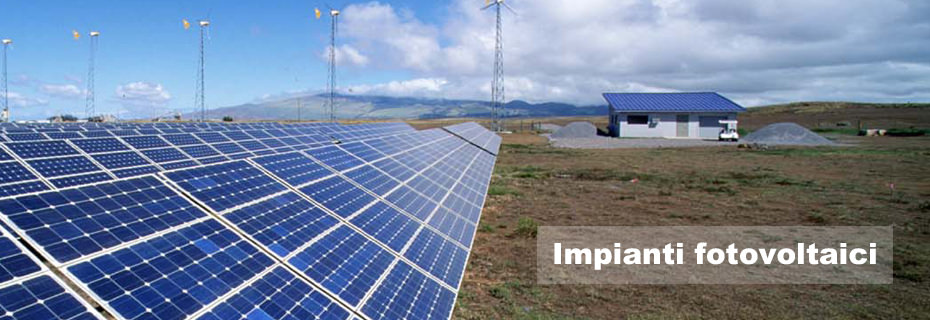
Stand-alone photovoltaic systems are an ideal solution for remote areas where the electricity grid is not available. Traditionally, in these areas, the only option was the use of power generators, which, although functional, have many disadvantages such as high noise, high maintenance costs and the need for continuous refuelling. Thanks to stand-alone photovoltaic systems, these problems have been overcome, offering a quieter, sustainable and less maintenance-intensive solution.
Over time, applications of photovoltaic solar technology have multiplied and diversified. Among the most popular solutions is the LED Solar Streetlight, an example of a completely autonomous lighting station. This type of street lamp offers a brightness comparable to that of traditional grid-connected street poles, but without requiring any connection to the grid itself.
The operation of the solar LED street lamp is simple and ingenious: photovoltaic modules installed at the top of the pole capture solar energy during the day, which is then stored in storage batteries. At night, the stored energy is used to power the LED lamp, providing illumination without additional operating costs and without negative environmental impact.
This type of solution is particularly useful not only in rural and isolated areas, but also in urban settings where the environmental impact and costs associated with public lighting are to be reduced.